Most hero tales end when the creature falls. This play starts there.
1 / 3
The tale
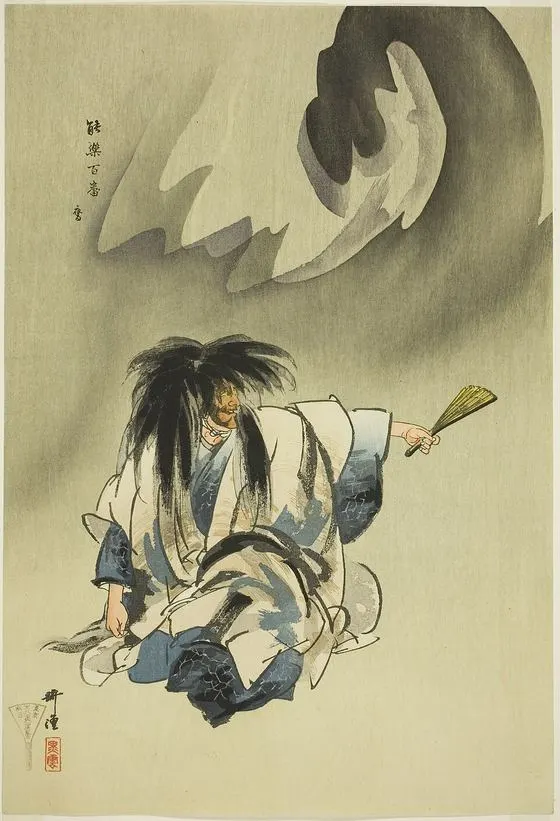
A travelling priest arrives at Ashiya and meets a boatman. At night the boatman turns out to be no ordinary man: he names himself as the nue.
The spirit tells how, in the reign of Emperor Konoe, Minamoto no Yorimasa shot it down. Yorimasa prayed to the god Hachiman and loosed his arrow. Afterwards it was pushed into a hollow boat and sent down the Yodo River.
It acts out that night again, and asks the priest for prayers. The play ends with a request for repose, not a fight.
2 / 3
Two sides of the telling
From its side
It speaks at length, and what it speaks about is not a fight. It tells how it was shot and then thrown away. The spider of the previous tale introduced itself to the man who would kill it. The nue talks to someone who will listen.
From the human side
The priest does not fight. He reads sutras for the dead, an act of memorial. The hero, Yorimasa, is not on stage as a character: his victory is something the nue remembers.
The question behind this seriesHow does a being with its own logic see us — and who gets to tell its story?
3 / 3
What Noh does with it
Yorimasa is a historical warrior of the Genji. Shooting the nue is his famous deed in the tales, and the play turns that deed around by letting the shot creature tell it.
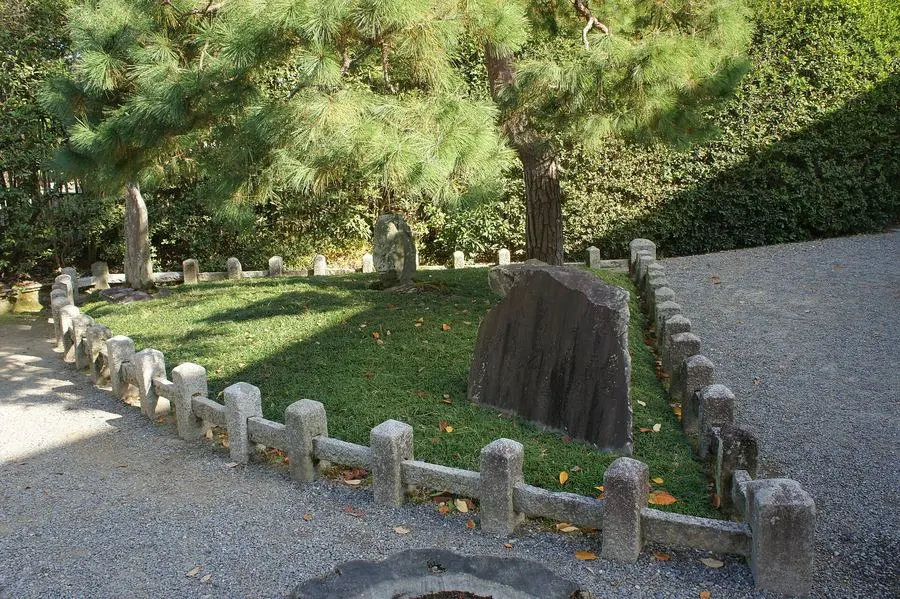
Yorimasa, the archer who shot the nue, was defeated in the Battle of Uji in 1180 and is said to have taken his own life in the grounds of Byōdō-in. The small lawn is called Ōgi-no-shiba, the fan lawn: tradition says he laid a fan facing west before he died. His grave is in the grounds, and each year on the anniversary, May 26, monks recite sutras there.