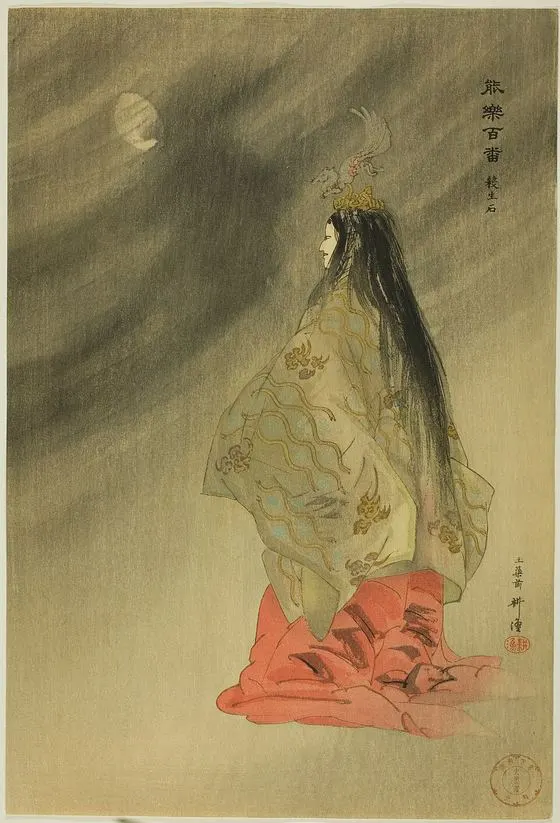
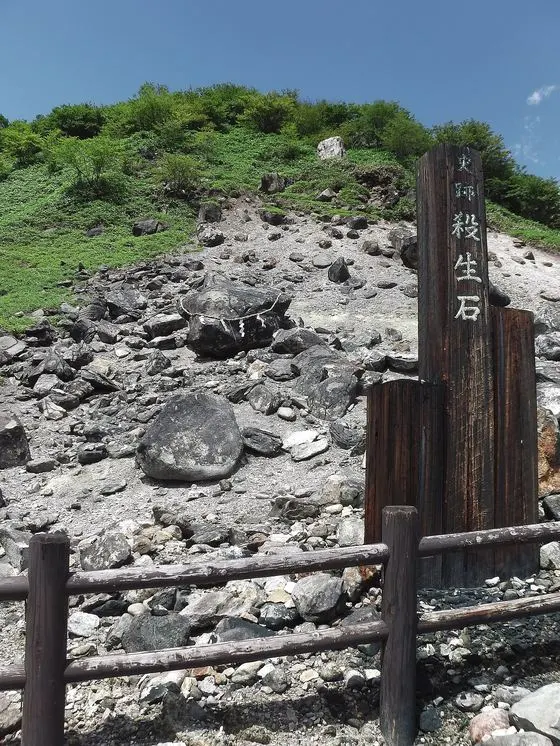
The story of a fox, a stone, and a priest who prays. Nobody is slain.
1 / 3
The tale
A priest, Gen’nō, is travelling through Nasu field when a village woman tells him about the Killing Stone and where it came from.
The woman is not what she seems. At the priest’s prayers, the spirit of a fox bound to the stone appears, the one once known as Tamamo no Mae. She vows to stop her harm.
2 / 3
Two sides of the telling
From its side
She tells her own origin through the village woman, then appears as herself. She is not killed. The priest’s prayer is what ends it, and she agrees.
From the human side
The priest does not fight. He prays, and the creature, which could have been destroyed, is allowed to repent. That is what this play does differently from slaying.
The question behind this seriesHow does a being with its own logic see us — and who gets to tell its story?
3 / 3
What Noh does with it
This is a being from far away. The wider legend has a fox moving through India, China and Japan, a larger frame joined to a stone in Nasu. The Noh play is the Japanese end of it, with the stone at its centre.
The Sesshōseki stone is a nationally designated Place of Scenic Beauty. Noh stages it as a fox spirit bound to the stone, who vows to stop her harm after the priest Gen’nō prays for her. A famous later version has the fox cross India, China and Japan; that is a different layer from the Noh play.