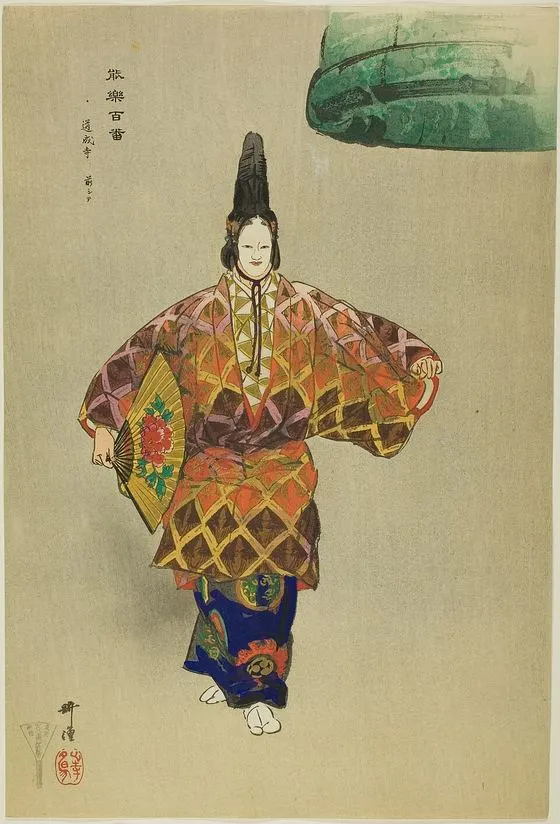
The serpent never tells its own story. A priest tells it for her.
1 / 3
The tale
A new bell is about to be hung at Dōjōji temple, and women are forbidden to enter the ceremony. A dancer, a shirabyōshi, begs to be let in, and the temple allows her. She dances before the bell, then leaps into it as it falls.
The priests, alarmed, tell the old story of this bell. A woman once loved a monk who broke his promise to her, and she became a serpent and chased him. He hid in a bell, and she burned him in it.
They pray before the bell. When it is raised, the woman inside has become a serpent. She fights them, and prayer drives her back.
2 / 3
Two sides of the telling
From its side
She says almost nothing about herself. The account of why she came belongs to the priests. On this stage, hers is the voice the temple explains, not the one it asks to hear.
From the human side
Here the human side holds the narration. The priests tell her story, and they are also the ones who pray her down. Whoever gives the explanation is the one who names her.
The question behind this seriesHow does a being with its own logic see us — and who gets to tell its story?
3 / 3
What Noh does with it
The dancer’s sequence is the centre of the play: a slow, tense approach, a fast dance, and the leap into the bell. The change into a serpent is staged by what the dancer wears and how she moves. The priest’s account, the prayer, and the pulling up of the bell follow in a fixed order.